How to Calculate the Anion Gap for Hypoalbuminemia
How is defined the Anion Gap?
The anion gap is a derived value that helps clinicians evaluate acid-base disorder profiles using routine blood chemistry data. It is derived from an electrolyte panel, especially serum sodium, serum chloride, and serum bicarbonate. In simple terms, it estimates the difference between the major measured cations and anions in the blood and helps reveal the presence of unmeasured anions.
A common way to calculate it is:
Anion gap = Serum sodium − (Serum chloride + Serum bicarbonate)
This anion gap formula is valuable because many acid-base problems change the relationship between sodium, chloride, and bicarbonate. A higher-than-expected value can signal metabolic acidosis, especially when acids accumulate in the blood. That is why the anion gap calculator is a handy tool for fast diagnostic calculation and bedside clinical assessment.
Although the formula is straightforward, the interpretation is not always simple. The measured result depends on blood chemistry, the specific laboratory values reported, and whether other factors such as low albumin are present. When albumin is low, the anion gap can look falsely normal or only mildly elevated even when a serious metabolic problem exists.
How Decreased Albumin Alters the Anion Gap
Albumin is among the primary anionic proteins in plasma, so it has a strong effect on the normal anion gap. Because it carries negative charge, albumin helps counterbalance positively charged ions in the blood and supports acid-base balance. When albumin falls, as in hypoalbuminemia, the reported anion gap often declines even if the acid burden has not changed.
This happens because a smaller number of negatively charged proteins are available to act as unmeasured anions. As a result, the body may still have the same degree of metabolic derangement, but the measured anion gap can look lower than expected. That can reduce diagnostic accuracy if the value is interpreted without considering serum albumin concentration.
In clinical practice, low albumin is a well-known reason that a patient with true acidosis may have an apparently normal anion gap. This is why an albumin-adjusted result is often more useful than the raw number. If the albumin level is reduced, the anion gap interpretation should be corrected before deciding whether the pattern is consistent with high-gap or normal-gap disease.
How to Calculate the Correction for the Anion Gap for Low Albumin
The basic correction formula often used in practice applies a fixed amount to the measured anion gap for each gram per deciliter that albumin is below normal. A widely used adjustment is:
Corrected anion gap = Measured anion gap + 2.5 × (4.0 − Serum albumin)
Here, serum albumin is in g/dL and 4.0 g/dL is treated as a typical normal reference point. The value 2.5 is the albumin correction factor. This gives an adjusted anion gap that more accurately reflects the presence of acid-base balance changes when albumin is low.
Some tools, including an anion gap calculator, may display this as an albumin-corrected anion gap or corrected anion gap. The result is useful because it takes into account the loss of negative charge from low serum albumin and enhances the clinical readout of the acid-base picture.
The same concept is sometimes referred to with the goldman equation, though different references may describe albumin adjustment in slightly different ways. Regardless of the naming convention, the goal is the same: compensate for the effect of hypoalbuminemia so the clinician can better identify hidden high-gap disease.
In short, if albumin is low, the raw anion gap may underestimate the true burden of acid accumulation. A corrected value helps separate a true normal anion gap metabolic acidosis from a masked high anion gap metabolic acidosis.
Step-by-Step Example of the Adjustment
Presented below is a hands-on sample calculation showing how low albumin affects interpretation.
Assume the following values are reported on the lab panel:
- Sodium: 138 mEq/L
- Chloride: 104 mEq/L
- Bicarbonate: 24 mEq/L
- Serum albumin: 2.0 g/dL
First, calculate the raw anion gap:
138 − (104 + 24) = 10
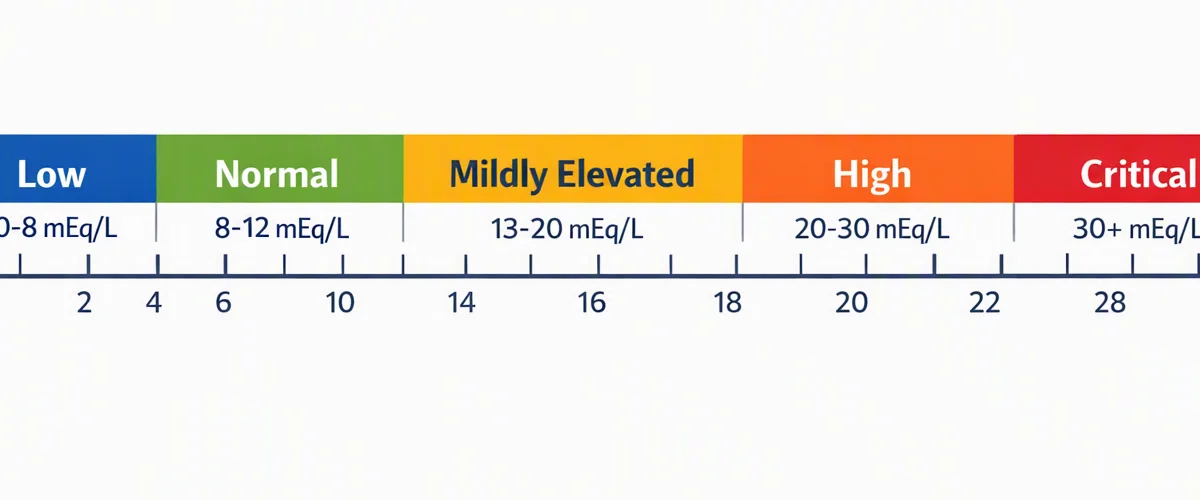
A value of 10 may appear within the expected anion gap range in many laboratories. However, albumin is clearly low, so correction is needed.
After that, calculate the albumin adjustment:
2.5 × (4.0 − 2.0) = 5
Afterward add that correction to the measured value:
Final anion gap = 10 + 5 = 15
This albumin correction factor changes the interpretation substantially. What initially looked like a normal value becomes a mildly elevated adjusted anion gap. That may prompt closer evaluation for a hidden acid load, especially if the patient also has signs of metabolic acidosis.
This is exactly where an anion gap calculator can be useful. A calculator can quickly perform the diagnostic calculation and reduce arithmetic errors, but the clinician still needs to interpret the result in context. The corrected number should be read alongside pH, bicarbonate level, and the broader clinical picture.
Interpreting the Corrected Anion Gap
The corrected value alters clinical interpretation by indicating whether low albumin has masked a real acid-base problem. If the corrected anion gap is elevated, that indicates a high anion gap metabolic acidosis. If it is normal, the problem may be a true normal anion gap metabolic acidosis or a different disorder entirely.
A high corrected gap often indicates added acid burden from conditions such as lactic acidosis, ketoacidosis, or renal failure. In these settings, the body retains acids or https://anion-gap-values163.brightsora.com/posts/anion-gap-calculator-for-interpretation-of-serum-chemistry cannot clear them efficiently. The anion gap rises because the acid is accompanied by unmeasured anions that are not directly shown on the basic chemistry panel.
By contrast, a normal corrected gap suggests either no major accumulation of unmeasured acids or a disorder where bicarbonate loss is offset by chloride retention. That pattern is often seen in normal-gap states, though the full diagnosis still depends on the patient’s clinical context.
It helps to think of the corrected result as improving anion gap interpretation. The raw value reflects the measured electrolytes, but the corrected value better accounts for protein-related effects on electrolyte imbalance and renal compensation. If the patient has low albumin and the corrected number is high, the case for a true acid-base problem becomes stronger.
Common Causes of Decreased Albumin to Consider
Before relying on the correction, it is crucial to understand the reason albumin is low. Various common conditions can result in hypoalbuminemia and change the anion gap.
- Malnutrition, which limits protein intake and synthesis
- Liver disease, which disrupts albumin production
- Kidney disease, notably when protein loss occurs in urine
- Inflammation, which can lower albumin during acute or chronic illness
These mechanisms may coexist with metabolic problems that change acid-base status. As an example, a patient with systemic illness may have low albumin from systemic inflammation and at the same time have lactic acid accumulation. If the raw anion gap is not corrected, the clinical assessment may underestimate the severity of the acid disturbance.
Because of this the albumin level should always be viewed as part of the overall blood chemistry review rather than an isolated number. A low albumin level is not just a nutritional marker; it affects how the entire metabolic picture is read.
Constraints of Anion Gap Correction
Although correction improves accuracy, it is not ideal. One limitation is laboratory variation. Separate analyzers and reference methods can produce slightly different sodium, chloride, bicarbonate, and albumin results, which may affect the final calculated number.
Another limitation is testing error. Small inaccuracies in serum sodium or chloride can shift the measured value enough to change whether the result appears normal or elevated. Because the formula depends on several individual values, error in any one component can influence the final interpretation.
There is also the issue of mixed acid-base disorders. A patient may have more than one disturbance at the same time, such as lactic acidosis plus vomiting-related alkalosis or renal disease plus respiratory compensation. In those cases, the corrected gap aids but does not fully describe the problem.
Above all, the result must be integrated with clinical context. An algorithm or calculator should never replace bedside judgment. The corrected number is a guide, not a diagnosis. It should be used with symptoms, exam findings, trends in laboratory values, and the likely source of the underlying metabolic problem.
So while the corrected value improves diagnosis accuracy, it should be treated as one part of a broader clinical interpretation rather than a final answer.
When to Use an Anion Gap Calculator
An anion gap calculator is particularly useful when you need quick clinical decision support during interpretation of an electrolyte panel. It is particularly useful when albumin is available and you want to know whether the low protein level is hiding a clinically important gap.
Use a calculator when:
- The patient has an acid-base disorder and the cause is unclear
- The albumin level is reduced
- The measured gap looks normal but suspicion for acidosis remains high
- You need a fast diagnostic calculation at the bedside or during chart review
- You want to compare the raw and corrected values for better anion gap interpretation
A calculator can also reduce the chance of manual error when multiple results must be interpreted quickly. It supports improved decisions when evaluating possible metabolic acidosis, especially if the patient has infection, shock, renal dysfunction, or another condition that may produce unmeasured acids.
In practice, the best use of the tool is to pair the measured and corrected values. The raw result tells you what the chemistry panel shows. The albumin-adjusted result tells you what the gap may truly mean after accounting for low protein. Together, they improve the quality of clinical assessment.
FAQ

How can you correct the anion gap for low albumin?
Use the measured anion gap and add a correction for the low albumin level. A common method is: corrected anion gap = measured anion gap + 2.5 × (4.0 − serum albumin). This gives an albumin-corrected anion gap that is more precise when low albumin is present.
How is albumin-corrected anion gap?
The usual anion gap formula for correction is: corrected anion gap = measured anion gap + 2.5 × (4.0 − serum albumin in g/dL). The 2.5 value is the albumin correction factor, and 4.0 g/dL is the normal reference point used in many calculations.
Why is it that hypoalbuminemia to reduce the anion gap?
Hypoalbuminemia lowers the anion gap because albumin is a key negatively charged protein in the blood. When albumin drops, there are fewer unmeasured anions, so the measured value declines even if the underlying acid-base status has not improved. This can affect interpretation of the finding.
In what situations should the corrected anion gap be used?
The corrected value should be used whenever albumin is low and you need improved clinical interpretation of a possible acid-base disorder. It is especially important when evaluating suspected metabolic acidosis and the measured gap looks normal despite clear clinical concern.
Which conditions can still cause a high anion gap after albumin correction?
After correction, a high value may still reflect high anion gap metabolic acidosis from causes such as lactic acidosis, ketoacidosis, or renal failure. The corrected result helps reveal these conditions when low albumin had been hiding the true severity of the acid-base problem.